


Hot Stuff

Human-induced changes to the environment often come as very bad news; deforestation, climate change, habitat loss, pollution... So when human activities seemingly have a positive impact on wildlife, it can almost seem too good to be true. Yet, the formation of large aggregations of sharks around power plant effluents might offer just such an example. So why do sharks flock to these sites? Where does it happen? And is this phenomenon actually a good sign for sharks?

It's Getting Hot in Herre
Coastal power plants cool their turbines down by drawing cool water in from nearby water sources, like rivers or oceans. As the water that is pumped back out is warmer, the temperatures around in the these facilities can be as much as 10°C higher for about 2 km around the plant - and the waters are turbid, with strong currents, making them richly oxygenated (Barash et al, 2018).

As a result, these waters are often very attractive to a lot of marine life. Bull sharks (Carcharginus leucas) are often attracted to power plant effluents, for instance. At Tampa Electric's Big Bend Power Station in Florida, manatees and sharks gather around the discharge sites, especially when the surrounding waters drop below 20°C (Barash et al, 2018).
In Seal Beach, California, large aggregations of round stingrays (Urobatis halleri) form near the power plant discharge sites. Scientists suspect that this is because these warm, turbid conditions mimic those of their natural estuarine habitats (Barash et al, 2018; Hoisington & Lowe, 2005).
Some Like It Hot
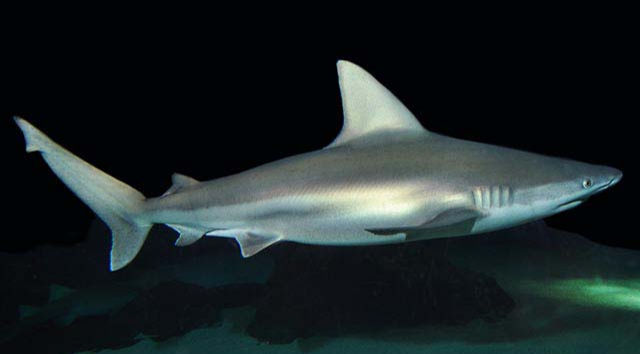
One of the most famous sites for sharks around power plants can be found in Israel. The Israel Electric Company operates five coastal plants that use Mediterranean seawater for cooling and over recent years, large schools of sharks have been reported flocking to these waters: hammerheads (Family Sphyrnidae), sandbar sharks (Carcharinus plumbeus) and dusky sharks (C. obscurus) (Barash et al, 2018).
![Sharks now aggregate around several different power plants off the coast of Israel [BLUE SQUARES ON MAP] (Image: Barash et al, 2018)](https://static.wixstatic.com/media/4039e7_2366bb4e68fd413594fe04e609a427ff~mv2.jpg/v1/fill/w_396,h_461,al_c,q_80,enc_avif,quality_auto/4039e7_2366bb4e68fd413594fe04e609a427ff~mv2.jpg)
Sharks converging on these effluents is becoming increasingly common, especially during the colder winter months. Therefore, scientists suspect they may be drawn there for "thermoregulation" - moving into the warm regions to regulate their internal body temperature. This may help boost their metabolism or even aid to speed up embryonic growth in pregnant females (Barash et al, 2018).
It's also possible that the warmer temperatures are indirectly helpful to these sharks. The quantities of fish an algae that flourish around power plant effluent sites in the Med are substantially higher than other sites along the Israeli coast. So as well as the cozy temperatures, high prey abundance may contribute to driving the sharks to stay around these spots for extended periods during the winter (Barash et al, 2018).
Heating Up
Shark populations have been decimated in the Mediterranean Sea, however, it seems that Eastern shores have become more suitable for sandbars and dusky sharks over the last 40 years (Barash et al, 2018).
"Sharks near warm water effluents appear to be increasingly prevalent... a surprising fact considering the collapse of many shark populations worldwide, particularly in the Mediterranean"

Whilst it is undeniable that more of these sharks are sighted around Israeli power plants in the Med over the last decade, what is unclear is whether their numbers have genuinely increased or if they have just shifted their migration routes and/or aggregation sites to this new site (Barash et al, 2018).
Dusky sharks especially are rare in the Med and have never been observed aggregating in large numbers before, suggesting their movement ecology and grouping behaviour has been altered by these human-induced hotspots (Barash et al, 2023).
Hot and Cold
Some experts have expressed concerns that these warm regions may effectively trap the sharks in the Med, as they may not be able to tolerate the large patches of cooler surrounding waters, when they attempt to relocate away from the Israeli coastline. There may also be a risk that coming closer to shore around the plants could put the sharks at higher risk from pollution or human activities, like fishing (Barash et al, 2023).

On the other hand, this may be good news, as the warm water effluents may be providing improved conditions for these sharks, which could help to bolster their dwindling populations. Some pelagic species of sharks have declined so severely that they effectively disappeared from the Mediterranean coasts and 30% of the species that call the Mediterranean region home are now flagged as Critically Endangered or Endangered, according to the IUCN. If these warmer waters are boosting their growth and reproductive output, this will be joyous news, but we need to watch this space for further updates, as scientists continue to study this fascinating new phenomena (Barash et al, 2018).
References
Barash A, Pickholtz R, Pickholtz E, Blaustein L & Rilov G (2018). Seasonal aggregations of sharks near coastal power plants in Israel: an emerging phenomenon. Marine Ecology Progress Series, 590. Access online.
Barash A, Scheinin A, Bigal E, Zemah Shamir Z, Martinez S, Davidi A & Tchernov D (2023). Some like it hot: Investigating thermoregulatory behavior of carcharhinid sharks in a natural environment with artificially elevated temperatures. Fishes, 8:9, 428. Access online.
Hoisington IV G & Lowe CG (2005). Abundance and distribution of the round stingray, Urobatis halleri, near a heated effluent outfall. Marine Environmental Research, 60:4. Access online.



nice
Its fascinating how human-made warm waters can attract sharks, but I worry about potential ecological traps affecting their natural behaviors. https://codepython.online/ru/and-in-python