


Cocaine Shark

There is an enormous list of marine contaminants that we know are harmful to sharks and other ocean life: oil spills, fertiliser run-off and eutrophication, littering, ghost fishing, microplastics, heavy metals, illegal chemical and nuclear dumping, to name a few... but very few people ever consider the impact that pharmaceuticals may have. Drugs that human beings have developed - both legal and elicit - and the compounds they break down into, that should not normally exist in natural environments, are somehow finding their way into marine habitats. But which pharmaceuticals are contaminating the oceans? How did they get there? And how much of a threat does this actually pose to animals like sharks?
Total Wash Out
Human beings use substances and compounds every single day. Whether it's taking a paracetamol or a medicine prescribed by a doctor, or applying antiseptic cream or topical medicines, or simply just washing your hair. On a larger scale, compounds are produced in factories, farms or hospitals, or leech from landfill and other waste. All these chemical compounds are washed down drains, into waterways and eventually out into the ocean (Nishmitha et al, 2025).

As a result pharmaceuticals are now so prevalent in the marine environment that scientists have flagged them as 'contaminants of emerging concern' or CECs for short, as we are only just beginning to understand the impacts these substances may have. CECs of concern include personal care products; such as body washes, face scrubs, shampoos, sunscreens, perfumes; pharmaceuticals; painkillers, antibiotics, antidepressants or veterinary medications; and illegal substances; like cocaine (Gelsleichter & Walker, 2010; Nishmitha et al, 2025; Wosnick et al, 2026).


I Prevail
Tests conducted on aquatic animals like mollusks and zebrafish, have shown CECs can be extremely toxic; with links to disrupted fat metabolism, enzyme damage, cellular disfunction, reduced cell viability and increased cell death, DNA fragmentation and severe oxidative stress, and significant behavioural changes (de Farias Araujo et al, 2024).
These CECs are also very persistent, so they remain biologically active for extended periods - sticking around to cause trouble for a long time. In addition, when they do eventually deteriorate, the molecules they break down into may also be just as harmful, creating a double-edged sword (de Farias Araujo et al, 2024; Wosnick et al, 2026).
The High Seas
For example, cocaine is a potent stimulant that has been linked to several different health concerns (hyperglycaemia, disruption of lipid metabolism and lactate accumulation) in mammals and other vertebrate animals, but after metabolism it forms benzoylecgonine, which has also been shown to cause life-threatening changes in movement ecology and behaviour in Atlantic salmon (Salmo salar) (de Farias Araujo et al, 2024; Brand et al, 2026; Wosnick et al, 2026). Talk about a lose lose situation!
In a study in Brazil, 100% of Brazilian sharpnose sharks (Rhizoprionodon lalandii) were found to be contaminated with cocaine and/or its metabolites at some point in their lifetime: males, females, young and old. Disturbingly, this included pregnant females, which could mean these drugs are harming these animals before they are even born (Brand et al, 2026).

What a Pain
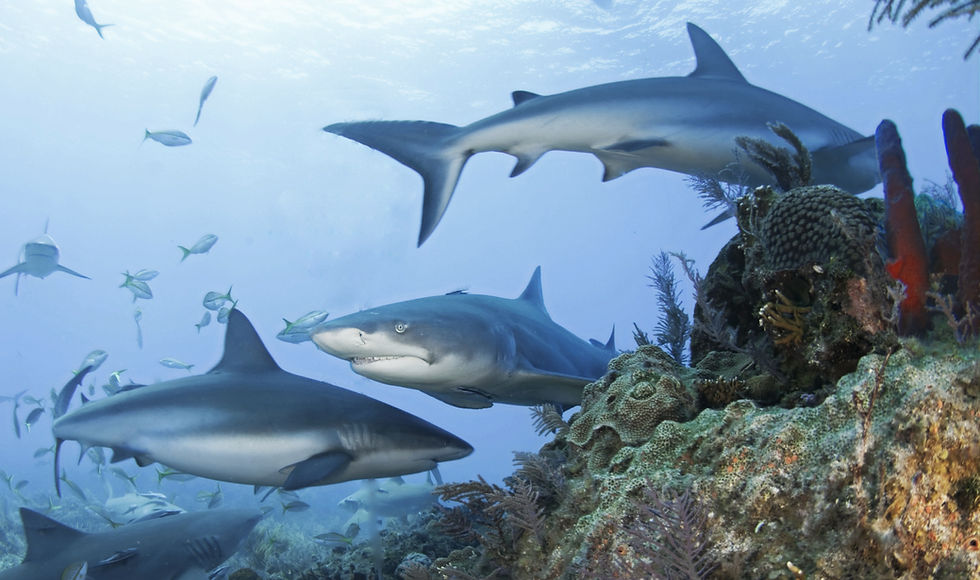
Whilst alarming, these findings may not come as too much of a surprise as this region of the world has enormous cocaine use and production, and is also highly urbanised and densely populated. However, CECs, including cocaine, have also been found in sharks in much more secluded, pristine environments. In the Bahamas, for example, blood serum tests showed that several different species of sharks were contaminated by cocaine, but also caffeine, acetaminophen (a common pain killer) and diclofenac (a non-steroidal anti-inflammatory drug with similar applications to ibuprofen) (Wosnick et al, 2026).
Diclofenac has been connected to kidney issues and acetaminophen is known to affect the metabolism and regulation of dietary fats in various vertebrates (Wosnick et al, 2026).
In this study the scientists also investigated what so-called biochemical markers (triglycerides, urea, and lactate) were present in the blood of these sharks. The levels of these molecules can be used a proxy for the ill-health of the animal, as their presence indicates stress, metabolic concerns, and liver or kidney issues. The scientists found that there was a clear relationship between positive results for CECs in nurse sharks (Ginglymostoma cirratum), Caribbean reef sharks (Carcharhinus perezi) and nurse sharks (Ginglymostoma cirratum), and heightened levels of these markers. In comparison, sharks that were not contaminated with these CECs exhibited negative biomarker results. This indicates that these sharks were suffering from some kind of poor health as a result of exposure to CECs (Wosnick et al, 2026).

The Come Down
One of the greatest concerns with all this is that we simply do not yet know what the long-term impacts for sharks. It is likely that different species will respond in different ways and contamination levels will vary by region; with coastal species with small home ranges nearer to urban centres likely suffering highest exposure. Scientists have expressed concerns that everyday CECs such as sunscreens, soaps, fragrances and cosmetics, could potentially interfere with physiological processes or disrupt hormones, thus altering reproduction and development (Gelsleichter & Walker, 2010; de Farias Araujo et al, 2024; Nishmitha et al, 2025; Brand et al, 2026; Wosnick et al, 2026).

As large-bodied, long-lived animals, sharks are especially vulnerable to biological contaminants via "bioaccumulation" (the natural tendency for pollutants to become concentrated in predators higher up the food chain). So CECs are likely to be a real problem across the board of sharks, but may be especially problematic for threatened species, that are already struggling to avoid extinction due to other stressors. As sharks are some of the most threatened animals on the planet - having experienced global, catastrophic declines - my instinct is that we should err on the side of caution and presume that we need to take immediate action to protect sharks from any and all CECs. And even if you don't care about nature, maybe take a moment to consider the affect that all these pollutants may be having on your own health! Now there's a sobering thought.
References
Brand JA, Palm D, Cerveny D, Michelangeli M, Bose AP, McCallum ES, Hellström G, Fick J, Brooks BW, Brodin T & Bertram MG (2026). Cocaine pollution alters the movement and space use of Atlantic salmon (Salmo salar) in a large natural lake. Current Biology, 36:8. Access online.
de Farias Araujo G, de Oliveira LVA, Hoff RB, Wosnick N, Vianna M, Verruck S, Hauser-Davis RA & Saggioro EM (2024). “Cocaine Shark”: First report on cocaine and benzoylecgonine detection in sharks. Science of The Total Environment, 948, 174798. Access online.
Gelsleichter J & Walker CJ (2010). Pollutant exposure and effects in sharks and their relatives. In: Carrier JC, Musick JA & Heithaus MR (Eds.), Sharks and their relatives II, pp. 507-554. CRC Press.
Nishmitha PS, Akhilghosh KA, Aiswriya VP, Ramesh A, Muthuchamy M & Muthukumar A (2025). Understanding emerging contaminants in water and wastewater: A comprehensive review on detection, impacts, and solutions. Journal of Hazardous Materials Advances, 18, 100755. Access online.
Wosnick N, Agudelo MAH, Deolindo CTP, Hoff R, De Oliveira LVA, Cardena PAB, Leite RD, Charvet P, Hauser-Davis RA & Saggioro EM (2026). Drugs in paradise: caffeine, cocaine, and painkillers detected in sharks from The Bahamas. Environmental Pollution, 127818. Access online.


Comments